
Transplantation
Background
Obtaining a kidney transplant often means the difference between life and death for those with kidney failure, but organs are not readily available to all who need one. As kidney function declines, harmful levels of fluid and toxins accumulate in the body, contributing to increased blood pressure, uremia and kidney failure (1). End-stage kidney disease (ESKD) occurs when the kidneys have lost approximately 90% of their ability to function normally. The common causes of end-stage kidney disease include diabetes, chronic uncontrolled high blood pressure, chronic glomerulonephritis and eventual scarring of the glomeruli within the kidneys, and polycystic kidney disease (1,2). ESKD patients require waste removal from their bloodstream via a dialysis machine or a kidney transplant to stay alive (2).
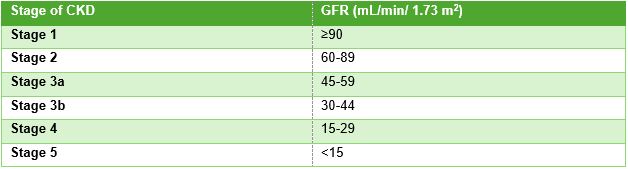
Table 1: Staging Chronic Kidney Disease (3)
Kidney transplantation improves long-term survival compared to maintenance dialysis. In a transplant waiting list that included 46,164 patients in the United States (US) between 1991 and 1997, the mortality was 68% lower for transplant recipients compared to those that remained on maintenance dialysis (4). Kidney transplantation is the treatment of choice for ESKD patients; however, the process involves a series of challenges, such as a shortage of organs, that frequently leaves people waiting on dialysis, finding compatible grafts, and optimizing cold ischemia time (CIT) (5). Although recent advances in immunosuppressive therapy, organ allocation policies, and overall improved medical care of recipients have resulted in an increased number of transplants, there continue to be questionable positive outcomes (5,6). Steroid avoidance in kidney transplantation offers several metabolic advantages but is associated with higher early acute rejection rate. Calcineurin inhibitors (CNI) avoidance/withdrawal cannot be recommended today due to higher rejection rate and the inability to appropriately identify the low-risk patients who might benefit from strategy. Biomarker-driven minimization of maintenance immunosuppression offers great promises but continues to be tested.
Access to Transplantation
All patients with chronic kidney disease (CKD) category G4-G5 (GFR < 30mL/min/1.73m2) should be referred for assessment and education on the potential receipt of an organ transplant (6). Both living donations and deceased donor donations are now recognized by the World Health Organization (WHO) as critical to the capacity of nations to develop self- sufficiency for organ transplantations as no country in the world is capable to generate enough organs from these sources to meet the needs of their citizens (5).
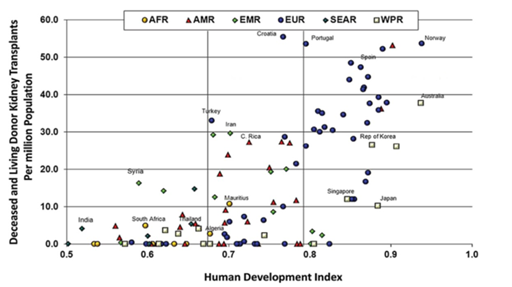
Figure 1: WHO Global Observatory on Donations and Transplantation (5)
The chart above is derived from the World Health Organization Global Observatory on Donations and Transplantation and demonstrates the relationship between transplant rate and human development index. The chart shows substantial disparities in access to transplantation across the world, with reduced transplant rates in low- and middle-income countries and a large spread of transplant rates among wealthier nations (5).
Types of Kidney Transplant
Living Donor:
The kidney is the most transplanted organ. According to the Center for Disease Control and Prevention, more than 10% of American adults have chronic kidney disease with 600,000 on dialysis and 100,000 on the waiting list for a transplant. For transplant, a compatible living donor is the preferred option. Living donors should be older than 18 years of age and in good overall physical and mental health. Relatives, loved ones, friends, and even individuals who wish to remain anonymous can often serve as a living donor and spare a patient a long and uncertain wait. Compatibility depends on blood type, such as Type O (Universal Donor) and Type AB (Universal Recipient) (7). Compatibility can also depend on antibodies. Human Leukocyte Antigen (HLA) is a protein expressed on all cells that allows the differentiation of cells from non-cells, such as a B-cell. Antibody-mediated rejection (AMR), also known as a B-cell mediated or humoral rejection, can be a complication after kidney transplantation that carries a poor prognosis. If incompatible HLA are present, the recipient’s blood will allergically react causing a rejection of donor organ. Fortunately, the antibodies can be removed through plasmapheresis allowing transplantation to occur (7,8).
Deceased Donor:
Organ donation and transplantation is a complex process that requires a combination of medical expertise and an organ donor collaboration (7). Most commonly, people become donors after a fatal injury such as stroke, heart attack or head trauma (8). The deceased donation process starts with a generous decision to want to help save someone in need of an organ. Most cases vary, but the following steps summarize an example process in donation from deceased donors (7,8).
- Transport
- A specialized team of Emergency Medical Technicians (EMTs) and paramedics begin life-saving efforts at the scene. They also contact emergency room physicians during transport (7)
- Treatment
- In the Emergency room, doctors and nurses evaluate injuries and continue life -saving efforts, including the use of ventilator, IV fluids, blood replacement and medicine to help the individual to maintain a heartbeat (7).
- Intensive care
- After vital signs stabilize, the patient is transferred to the ICU, where a doctor performs special tests to determine the extent of damage has been done to the brain and organs as the medical team continues advanced life saving measures during the tests (7).
- Brain death declared
- Brain death is diagnosed as an irreversible loss of blood flow to the whole brain, causing the brain to die. After brain death, the donor’s body is supported by a ventilator (7).
- Evaluation
- Specially trained medical practitioners from the organ procurement organization go to the hospital to assess whether the patient is medically suitable for organ donation (7).
- Authorization
- The physician communicates with the family about the patient’s death. Then, a trained hospital staff member talks to the family about donation. If the patient previously signed up to be a donor in his/her state or national registry, that information is shared with the family, and a counselor explains to the family the donation process and answers all of the family’s questions. This team effort supports the family and honors the patient’s wishes (7,8). It is important to consult any directives or estate documents from the patient. If the patient had not signed up in a state or national registry at the time of his/her death, the patient’s family takes time to process the situation and all the information provided before making a decision. The donation decision is easier if the family has previously discussed donation.
Eligibility for Transplant:
To be a good candidate for a kidney transplant, the recipient patient must be in reasonably good physical health determined by a self-regulation model of illness management that is based on social cognitive, engagement in self-care skills to be able to perform the necessary post-transplantation care required, and self-regulation to assess and predict chronic illness self-management. Importantly, the candidate should have a strong foundation with family support to have more successful outcomes. Additionally, willingness for long-term adherence to anti-rejection medication should be assessed, and the patient needs to be committed to regular post-transplant follow up (2,5).
Contraindications to Transplant:
Kidney transplant is the preferred treatment option for most people, but some individuals are not eligible. The patient may be considered by their care team for multiple reasons including cancer, severe infection, drug addiction, medical conditions that could affect and reduce life expectancy, and untreated psychiatric illness preventing self-care and medication adherence (5). Additionally, advanced age alone is not a contraindication to transplant (6).
Barriers to Kidney Transplantation
Lack of donors and poor knowledge were the main barriers to patients receiving kidney transplants. Religious or cultural barriers, lack of reimbursement, poor knowledge, and stringent donor criteria contributed to the limited donor pool. A lack of understanding of the transplantation process also influenced recipient’s and donor’s decisions to reject transplant (9).
Monitoring
General
Ongoing monitoring is crucial for kidney post-transplant management. One of the main purposes of monitoring is to evaluate the stability and functionality of the kidney (6). If the kidney function seems stable, then it can be assumed that the risk for an ongoing intrinsic process is low. Assessment should be completed to determine whether there is an acute or a chronic process or whether the underlying process causing the kidney instability is reversible, and whether this will affect the long- term graft survival (6,7). Comparing serial serum creatinine levels is common and widely used, but whether it is the best means to assess graft function is still questionable (5,8). A change in the level may indicate an intrinsic process such as acute rejection, which can occur at any time post-transplant. Unfortunately, this lack of specificity brings into question whether serum creatinine should be the test of choice for monitoring grafts (5).
Calcineurin inhibitors
CNIs block the activity of calcineurin, which is located in immune T cells. When calcineurin is blocked, T cells cannot produce the molecule interleukin-2 (IL-2). Without IL-2, T cells become less responsive to antigens (foreign molecules). Patients with an autoimmune disease, such as rheumatoid arthritis, lupus, or psoriasis, have T cells that behave abnormally. Overactive T cells cause widespread inflammation, resulting in tissue damage in areas like the joints or skin. Patients who receive a transplanted organ or tissue (graft) from another person need calcineurin inhibitors to suppress T cells from mounting an attack on the donated organ. As far as general monitoring, it is recommended to measure CNI blood levels and suggest measuring at least every other day during the immediate post-operative period until drug- specific targets are met (usually measured as mg/kg). Multiple CNIs are present on the market such as tacrolimus, cyclosporine, voclosporin, and pimecrolimus. Tacrolimus is recommended as the first line CNI treatment (10,11). Additionally, it is suggested that tacrolimus or cyclosporine A (CsA) be initiated before or at the time of transplantation, rather than delayed until the onset of graft function (11). When there is a change in medication or patient status that may affect blood levels or a decline in kidney function that may indicate nephrotoxicity or rejection, it is suggested to monitor CsA using 12-hour trough, 2-hour post-dose, or the area under the curve (AUC). Tacrolimus, mycophenolate, and Mammalian Target of Rapamycin Inhibitors (mTORi) levels should be monitored using 12-hour trough. Starting a combination of immunosuppressive medications before, or at the time of, kidney transplantation is recommended. Including induction therapy with a biologic agent as part of the initial immunosuppressive regimen in kidney transplant recipients (KTRs) is also recommended by the clinical guideline for the care of kidney transplant recipients. An IL2-RA is considered the first-line induction therapy. Combination of immunosuppressive medications including a CNI and antiproliferative agent such as mycophenolate, with or without corticosteroids, should be used in maintenance therapy (10,11).
Kidney allograft function
When it comes to kidney allograft function, urine volume should be measured every 1 to 2 hours for at least 24 hours after the transplant procedure and then daily until graft function is stable. In addition, urine protein excretion should be measured at least once in the first month to determine a baseline, followed by every 3 months during the first year, and annually, thereafter (11). Serum creatine should be measured daily for 7 days or until hospital discharge, whichever occurs sooner. This measurement should be followed by 2 to 3 times per week for the first 2 to 4 weeks, then weekly for 2 to 3 months, then every 2 weeks for 4 to 6 months, then monthly for months 7 to 12, and then every 2 to 3 months, thereafter (10,11).
Anti-rejection medication side effects
After a kidney transplant, there are medications to help prevent your body from rejecting the donor kidney. These medications can cause a variety of side effects that include bone thinning and bone damage, diabetes, excessive hair growth or hair loss, high blood pressure, and high cholesterol. Other side effects that could be seen include increased risk particularly skin cancer and lymphoma, infection, puffiness, and for some individuals weight gain and acne (10,11).
Vaccines:
Regarding vaccines, all kidney transplant recipients should receive inactivated vaccines according to recommended schedules for the general population, except for Hepatitis B vaccine (HBV). HBV vaccination should be ideally administered prior to transplantation, and HBsAb titers should be obtained 6 to 12 weeks after completing the vaccination series (11). For those who, due to age, direct exposure, residence in or travel to endemic areas, or other epidemiological risk factors, are at increased risk for the specific diseases such as rabies, pneumococcus, meningococcus, tick-borne meningoencephalitis, Japanese B encephalitis-inactivated, salmonella typhi-inactivated should receive vaccination (8,11).
Revaccination is recommended if the antibody titer falls below 10 mIU/ml. Importantly, live vaccines, except for the influenza vaccination, should be avoided in the first 6 months following kidney transplantation (10,11). Regular immunization schedules should resume once patients are receiving minimal maintenance doses of immunosuppressive medications, but it is recommended to give all recipients, who are at least 1-month post- transplant, the influenza vaccination prior to the onset of the annual influenza season, regardless of immunosuppression status (8,11).
Complications:
Although more likely occur in older, obese, and diabetic patients, significant risk associated with kidney transplantation should carefully contemplated by the patient’s health-care team and family. Bleeding is a major complication and blood in urine or hematuria can also be observed. In addition, complicated abdominal surgery weakens the abdominal muscles, and some patients may develop infectious tracts or canals called urinary fistula. Blood clots or arterial thrombosis may dislodge from the operative site and travel to the lungs, leading to life threatening complications such as pulmonary embolisms (6,11). Other complication include narrowing of the ureters, obstructing to flow of urine from kidney into the bladder or ureteric stenosis. Pyelonephritis or infection of the kidneys after surgery can also occur. However, some infections are common due to use of immunosuppressant mediations (10). Severe complications over the long term could involve risk of skin cancer or lymphomas, which could be due to the use of immunosuppressant mediations. Heart disease like high blood pressure, high cholesterol and others are common after a kidney transplant (11).
References:
- Thongprayoon C, Hansrivijit P, Leeaphorn N, et al. Recent Advances and Clinical Outcomes of Kidney Transplantation. J Clin Med. 2020;9(4):1193. Published 2020 Apr 22. Available from: https://pubmed.ncbi.nlm.nih.gov/32331309/
- Chadban SJ, Ahn C, Axelrod DA, et al. Summary of the kidney disease: Improving Global Outcomes (KDIGO) Clinical Practice Guideline on the Evaluation and Management of Candidates for Kidney Transplantation. Transplantation. 2020;104(4):708-714. Available from: https://journals.lww.com/transplantjournal/Fulltext/2020/04000/Summary_of_the_Kidney_Disease Improving_Global.12.aspx
- Stevens PE, Levin A; Kidney Disease: Improving Global Outcomes Chronic Kidney Disease Guideline Development Work Group Members. Evaluation and management of chronic kidney disease: synopsis of the kidney disease: improving global outcomes 2012 clinical practice guideline. Ann Intern Med. 2013;158(11):825-830. doi:10.7326/0003-4819-158-11-201306040-00007
- Garcia-Garcia G, Harden P, Chapman J. The global role of kidney transplantation. Indian J Nephrol. 2012;22(2):77-82. doi:10.4103/0971-4065.97101
- Kidney Disease: Improving Global Outcomes (KDIGO) Transplant Work Group. “KDIGO clinical practice guideline for the care of kidney transplant recipients.” American journal of transplantation: official journal of the American Society of Transplantation and the American Society of Transplant Surgeons vol. 9 Suppl 3 (2009): S1-155. Available from: https://pubmed.ncbi.nlm.nih.gov/19845597/
- Reyna-Sepúlveda F, Ponce-Escobedo A, Guevara-Charles A, et al. Outcomes and Surgical Complications in Kidney Transplantation. Int J Organ Transplant Med. 2017;8(2):78-84. Available from: https://pubmed.ncbi.nlm.nih.gov/28828167/
- Augustine, Joshua. “Kidney transplant: New opportunities and challenges.” Cleveland Clinic Journal of Medicine vol. 85,2 (2018): 138-144. Available from: https://pubmed.ncbi.nlm.nih.gov/29425089/
- Nemati, Eghlim et al. “Does kidney transplantation with deceased or living donor affect graft survival?” Nephro-urology monthly vol. 6,4 e12182. 5 Jul. 2014. Available from: https://www.ncbi.nlm.nih.gov/pmc/articles/PMC4317718/
- Farah SS, Alhaji MM, Ahmed D, et al. Barriers to Kidney Transplantation as a Choice of Renal Replacement Therapy. Transplant Proc. 2018;50(10):3165-3171. doi:10.1016/j.transproceed.2018.07.005
- Safarini, Omar A., et al. “Calcineurin Inhibitors.” StatPearls, StatPearls Publishing, 24 May 2022. Available from: https://www.ncbi.nlm.nih.gov/books/NBK558995/
- Kasiske, Bertram L et al. “KDIGO clinical practice guideline for the care of kidney transplant recipients: a summary.” Kidney international vol. 77,4 (2010): 299-311. Available from: https://www.sciencedirect.com/science/article/pii/S154855951630043X
GMO-000827 Rev A 03/2024